
Wojciech Kreft
November 30, 2025
•

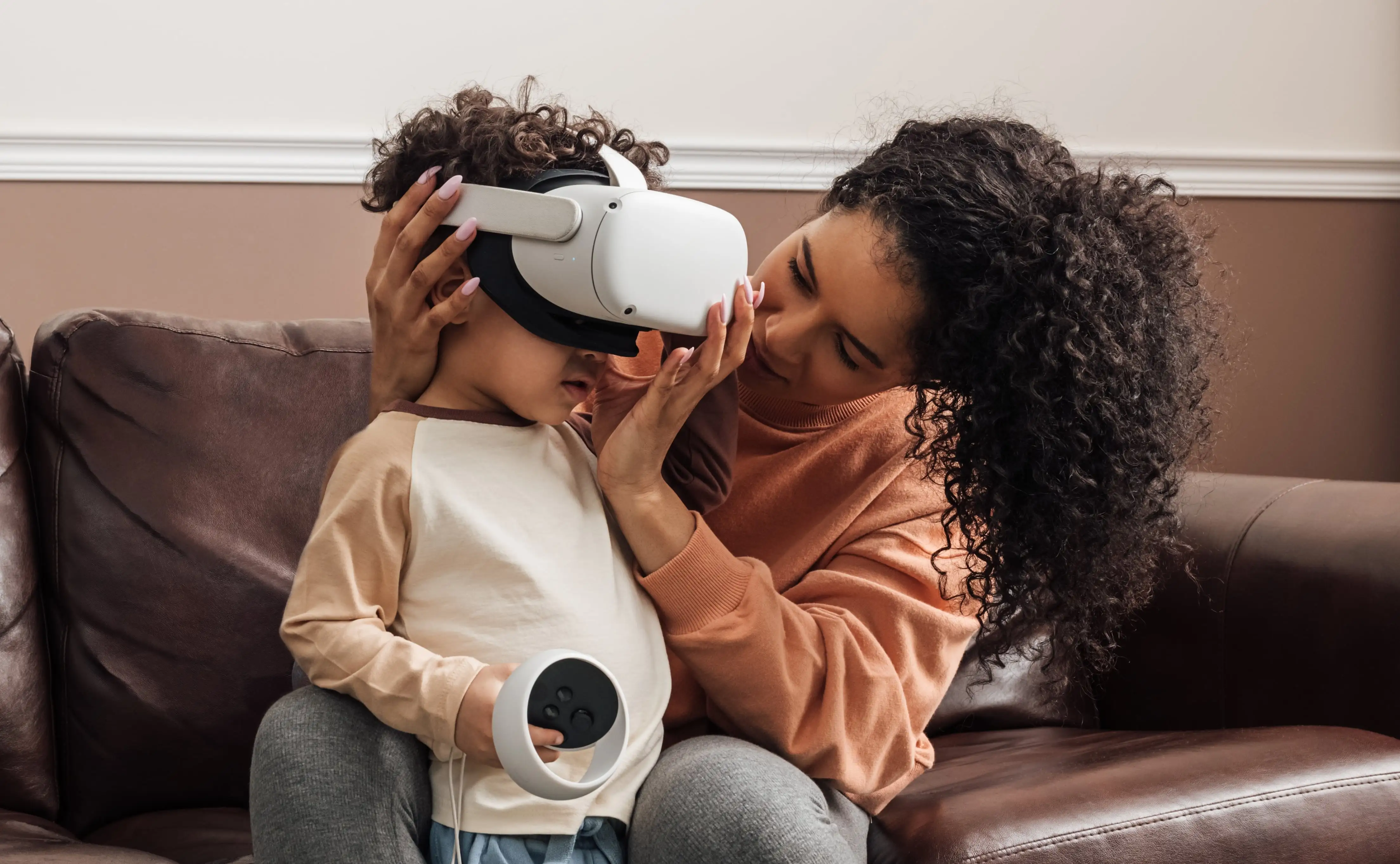
Virtual reality is one of those technologies that children find almost irresistible. VR offers intense sensations, colourful worlds and the feeling of being fully in control of what’s happening around them. It’s no surprise that kids want to put on a headset more and more often - and stay in VR longer each time. But for parents, a much more important question comes first: what should we know about virtual reality before we let our child step into this digital world?
In this article, I explain why VR is so appealing to children, what makes it such a unique experience for young users, and - most importantly - how you, as a parent, can introduce your child to virtual reality in a safe, thoughtful and responsible way.
As parents, we all want to understand what makes VR headsets so tempting for younger users. But what exactly makes virtual reality so engaging for children and teenagers?
Our brains process situations in virtual reality in a very similar way to how they process real-life events. Compared with other digital tools - even other immersive technologies - VR affects users more strongly and triggers deeper emotional responses. VR can spark fear, worry, confusion… but also joy, excitement and pure fascination. And children, as well as teenagers, are naturally hungry for strong emotions and new sensations. They actively look for ways to intensify their experiences - and VR gives them exactly that. That’s why it’s so appealing.
Emotional experiences grab our attention more effectively and stay in our memory for longer. Immersing yourself in VR makes it far more likely that you’ll remember certain information than if you only read about it in a textbook or listened to it in class. And let’s be honest - memorising facts by heart is tiring, and can quickly discourage children from learning at all. VR, on the other hand, supports effortless learning. Kids absorb knowledge almost “by accident”, simply by being part of an engaging experience. Tempting? Absolutely - and children feel it too.
In virtual reality, children can interact with the content around them, move freely through a digital world and observe how objects behave. And not just observe - they can change things. They can modify objects, move them, rotate them, make them appear or disappear. In other words: they have real influence over what happens. This sense of agency works like a reward for the brain. It makes kids eager to come back and engage again. And this very feature of VR can be incredibly valuable in educational and therapeutic settings - including pedagogical therapy.
Manipulating virtual objects gives children the chance to learn through hands-on experience. When a child touches, moves, separates, lifts or turns different items, they build understanding based on direct interaction. This type of learning is priceless - it helps create memories very similar to those formed in real-life situations. Discovering the world through personal experience feels exciting, fun and motivating. No wonder children want to return to VR environments again and again.
As 3D animation technologies improve, VR applications are becoming increasingly realistic. That visual quality greatly boosts the feeling of immersion. What’s more, developers often use colour palettes specifically designed to capture a child’s attention. Many VR experiences for young users rely on bright, high-contrast, vibrant colours - and those naturally feel more engaging than our everyday greys and neutrals. For children, that visual richness is irresistible.

Virtual reality is a technology that strongly engages the senses and emotions, which means young users need a thoughtful and gradual introduction. Although we often associate VR headsets with entertainment, the right VR environments can support cognitive development, emotional regulation, focus - and even therapeutic goals.
So the key question isn’t whether VR is “safe” on its own, but rather: how is your child using it?
It’s the parent, caregiver or teacher who gives this technology the right context - by setting time limits, observing the child’s reactions and choosing age-appropriate content. When VR is used consciously, in moderation and with the child’s needs in mind, it can become a valuable tool that supports learning and healthy development.
If you’d like to explore practical rules of VR safety, read our guide:
👉 How to Use VR Safely: A Complete Guide for Parents and Teachers
VR brings children plenty of joy, excitement and developmental opportunities - but it also requires adult presence and thoughtful guidance. You, as the parent, give this technology meaning and direction. You decide what your child sees, how long they use it and what kind of experiences they take away from the virtual world. Supporting a child doesn’t mean controlling every step. It’s about building a healthy relationship with technology - based on conversation, trust, awareness and clear boundaries.
Below you’ll find the most important tips to help you guide your child toward safe and responsible VR use.
VR experiences can feel more intense than traditional screen-based games — mainly because of immersion, the sense of being fully inside the virtual world. That’s why it’s so important to check every app before installing it and make sure its content and themes are truly appropriate for your child.
The world inside VR can feel incredibly real, which means the emotions that appear after a session may be very intense. This is a perfect moment to talk to your child about what they experienced. You can ask questions such as: How did you feel? What surprised you? What did you enjoy and what felt uncomfortable Such conversations help children build emotional awareness. They also teach them to name their feelings and make sense of new or unusual experiences. It is an opportunity to strengthen trust and create shared rituals around technology, based on curiosity and calm presence rather than judgement.
Observe how your child responds to VR. Look at both their physical and emotional reactions. If they feel nauseous, dizzy or visibly tired, it is best to take a break and return to VR another day. The headset will not disappear. Sometimes physical discomfort does not appear, but you may notice changes in mood such as sadness, irritability or tension. This is also a good moment to stop and suggest a break. VR is an option, not an obligation. Nothing bad happens if you spend your time together in another way.
Virtual reality is so engaging that children can easily lose track of time. This is why it is important to set clear boundaries together. Ideally, these should fit naturally into your family routine and leave space for rest, time with friends, everyday responsibilities and outdoor play. VR does not have to be a reward or a forbidden fruit. When used wisely and safely, it becomes one of many tools in a child’s day. Balance is the key.
VR headsets collect more data than any other common digital device. This means children and teenagers are especially vulnerable. Before installing an application, check its privacy policy. Pay particular attention to whether data is used for commercial purposes. It is also helpful to use parental control tools designed for VR. They allow you to check which apps your child uses and block access to those that may threaten their privacy.
Using VR together, even if you only watch the screen or sit next to your child and talk, turns technology into a shared experience instead of an isolated activity. When you observe your child in the virtual world, you learn what they are playing, what emotions they go through and how they interpret the digital environment. Playing together creates opportunities for teamwork, laughter and connection. It helps make virtual reality a space of closeness rather than a barrier between you and your child.
Although VR can support a child’s development, it is important to remember that it is not the right choice in every situation.
VR is better to avoid when:
Virtual reality is widely used to strengthen different areas of a child’s development. VR environments capture attention, spark curiosity and encourage natural motivation to explore. These qualities often open the door to meaningful educational or therapeutic experiences.
In VR, children learn primarily by doing. They can experiment, test ideas, try again and make mistakes without consequences. This strengthens their sense of agency and builds important executive skills.
Virtual reality also makes it possible to experience situations that would be unavailable in the real world. Children can visit space, explore the deep sea or observe natural phenomena that cannot be shown live. These realistic experiences of impossible worlds nurture imagination, cognitive curiosity and a readiness to learn.
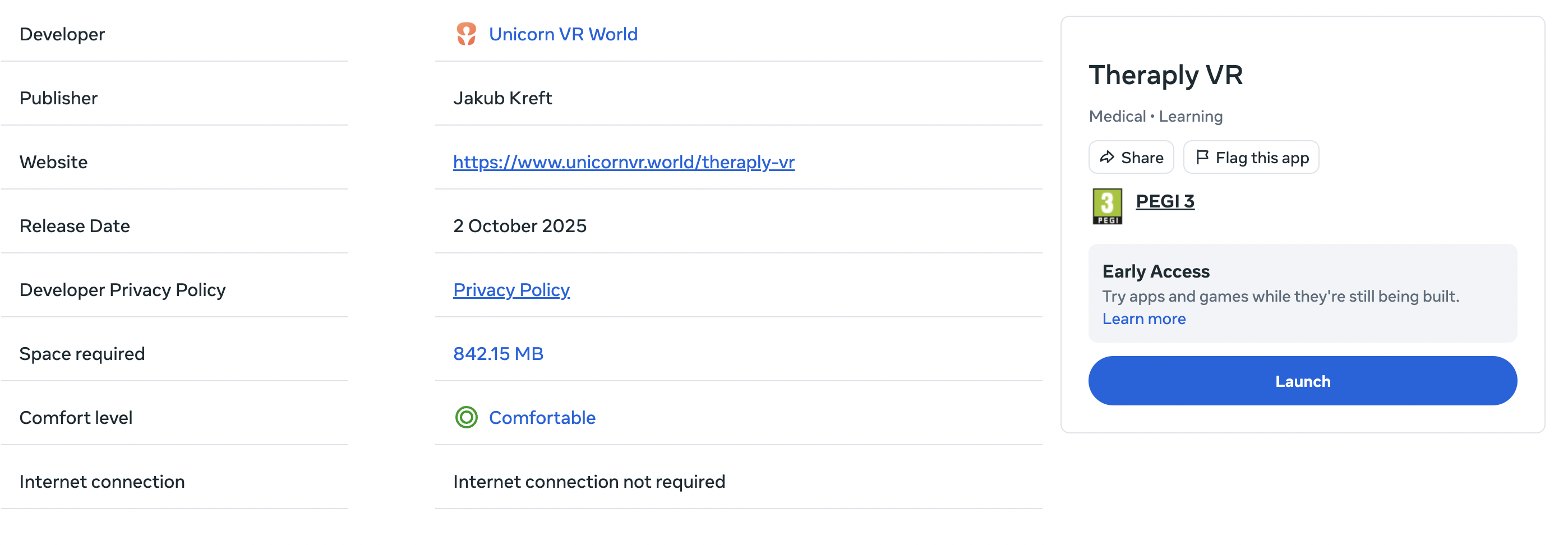
VR can support children who need extra motivation, calming experiences, gradual exposure to challenging stimuli or a safe space to practise specific skills. With well-chosen applications such as Theraply VR, this technology can complement therapeutic work, always with professional guidance and supervision.

Virtual reality is attractive to children because it is intense, immersive and offers something they often miss in the real world: a sense of agency, space to experiment and exciting experiences. It is completely natural that kids want to come back to it. That is why the presence of an adult is so important. Your role is to help them use this technology wisely, consciously and responsibly.
Key rules for safe VR use for children:
The most important thing is balance. Well-selected content, open conversations, attention to your child’s reactions and care for digital hygiene all help VR become not just entertainment, but a tool that supports development, curiosity and intrinsic motivation. VR itself is neither good nor bad. Its value depends on how we use it. When introduced thoughtfully, virtual reality can become a safe and engaging way for children to explore the world in a completely new way.
👉 Want to learn more about how VR affects children and how to introduce it wisely?
We invite you to explore the educational resources on our blog, created for parents, teachers and professionals working with young people. You will find reliable, practical knowledge that can help you make confident decisions about using VR at home.
Yes, but under certain conditions. Younger children should use VR only during short five to fifteen-minute sessions, always supervised and with carefully selected apps. Regular breaks are essential. What matters most is observing your child’s reactions. If they respond well to VR, it can be a safe and valuable experience.
Session length depends on several factors, including age and the purpose of use. For school-aged children, short sessions of five to fifteen minutes work best. This also applies when VR is used as a relaxation tool.
If you are not very familiar with VR apps, look at the PEGI rating. Depending on your child’s age, choose games marked PEGI 3, 7 or 12. It is best to avoid content that could frighten your child, cause discomfort or trigger nausea.
Yes, even more strongly than traditional screen-based games. The brain processes VR experiences almost as if they were real, which means children may feel joy, excitement, curiosity but also stress, fear or uneasiness. After each session, take a moment to talk about what they experienced, what they liked and what felt difficult. This supports emotional regulation and teaches mindful use of technology.
It can, as long as the content is well chosen. In VR, children learn through doing. They can experiment, explore and experience situations that would be impossible to recreate in real life. This builds curiosity, motivation and focus. Virtual reality can be a valuable addition to learning, but it will not replace teachers or peer interactions. Treat it as a supportive tool, not the foundation of the learning process.
Sources:
https://www.commonsensemedia.org/kids-action/articles/kids-deserve-better-privacy-in-virtual-reality
https://www.commonsensemedia.org/articles/what-parents-need-to-know-about-virtual-reality

.webp)
.webp)